Parking training.
Build your confidence.
Explore 29 parking scenarios, from your first reverse to tight garages and precision maneuvers. Choose an exercise below and practice at your own pace.
Five scenarios are free, with no account needed. Full Access unlocks all 29 scenarios and 17 Extreme challenges for €9.99 once, without a subscription.
Learn parking online. Understand your car.
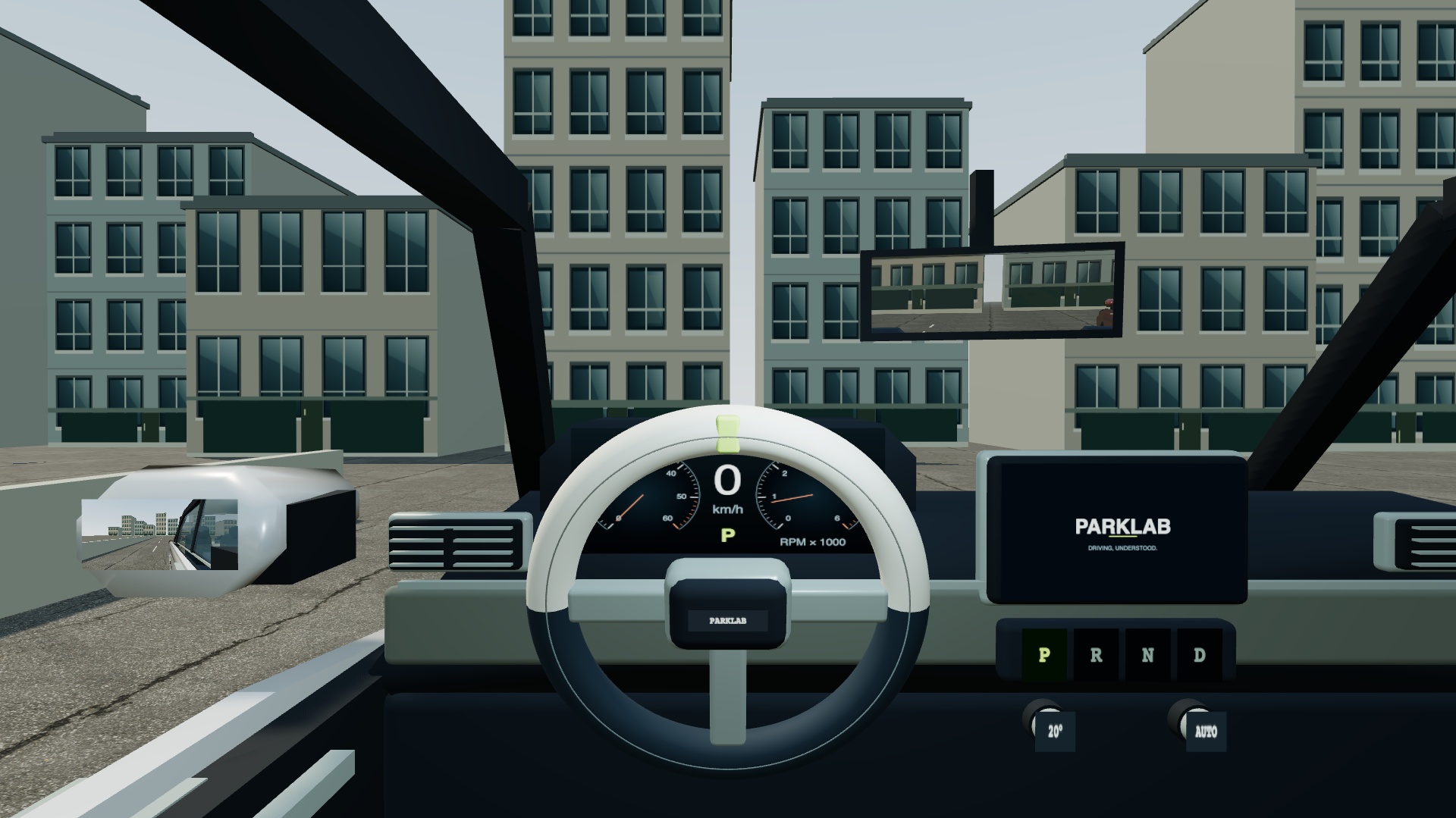
Watch a parking demonstration, then take the wheel. Switch between cockpit, rear camera, geometry, orbit, outside and free views to understand the front swing and the rear-wheel path. Replay your own attempt and review its clearances.
Practice reverse bay parking, parallel parking on the right or left, narrow garage entrances and three-point turns. Progress from generous spaces to tighter layouts at five difficulty levels. The white car is yours; surrounding vehicles and solid obstacles help you judge every corner.
New to car parking? Read our guide to learning to park a car, with a practice routine and visual examples from ParkLab.
Use the arrow keys to drive and steer, and hold X to brake. On mobile, turn your phone to landscape and use the touch controls. Full screen gives you more room to see the road. Create an account to keep your progress and Full Access available across devices.
ParkLab is a practice simulator, not a driving certification. Mirror reference points depend on the vehicle and seat position. Use the views to understand the geometry and keep checking the whole vehicle envelope.
Choose your maneuver
Reverse Bay Parking
Reverse from the aisle, turn between neighboring cars, and finish inside the lines.
Parallel Parking · Right
A generous curbside space. Learn the arc, the front swing, and the final alignment.
Parallel Parking · Left
A generous curbside space. Learn the arc, the front swing, and the final alignment.
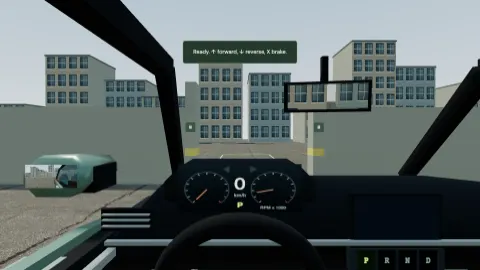
Tight Garage Entrance
Enter a narrow opening with the full vehicle envelope.
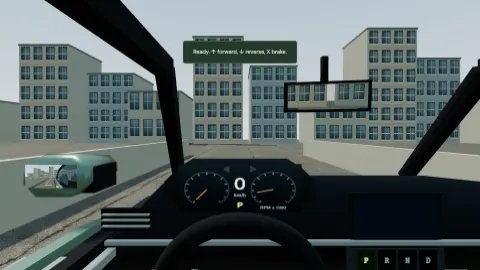
Three-Point Turn
Turn around on a street bounded by concrete walls.
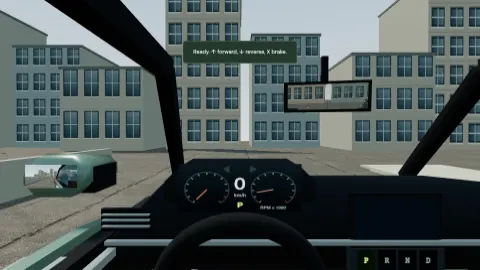
Tight Parallel Parking
Small margins. Use the whole gap and make deliberate corrections.
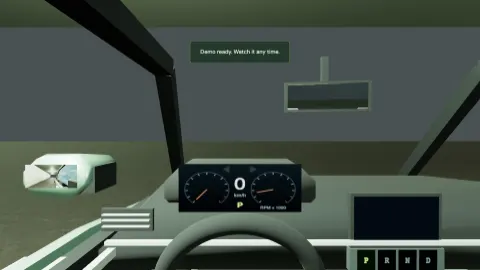
Narrow Underground Garage
Concrete walls, structural columns, a low ceiling, and a narrow aisle.
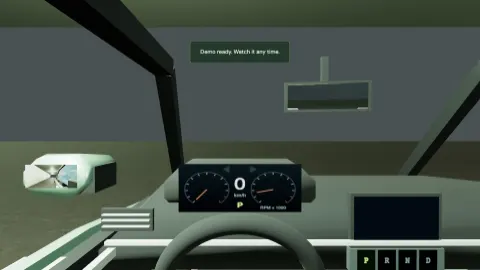
Pillar Nightmare
A column beside the bay exposes the cost of turning too early.
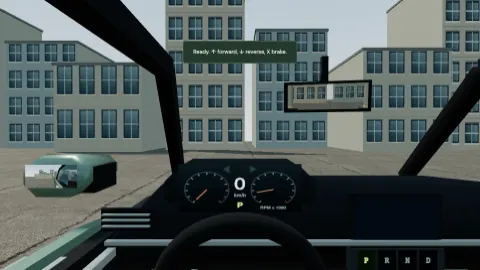
Reverse Through a Gate
Two narrow posts. Your mirrors are wider than the body.
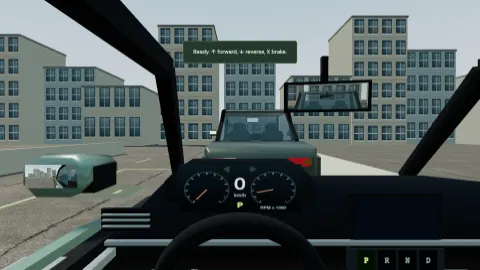
Escape From Tight Parking
Start inside the gap and work your way into the lane.
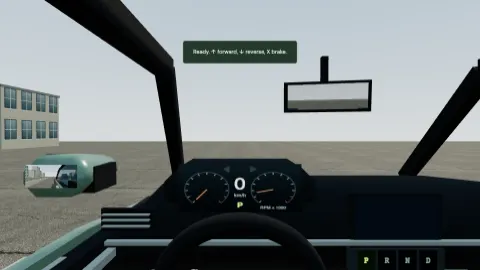
Mirror-Only Challenge
Use both mirrors to park. Inspect the maneuver from every camera whenever you need.
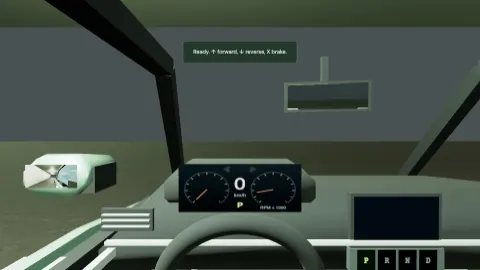
Front Corner Clearance
Learn how the nose swings outside the rear-wheel path.
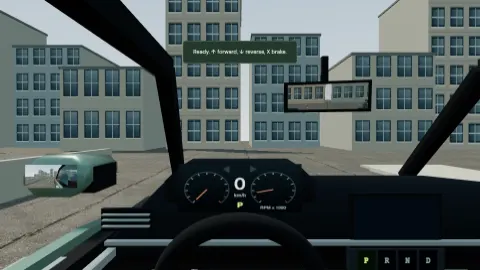
Rear Wheel / Curb Mastery
Bring the tire sidewall close to the curb without contact.
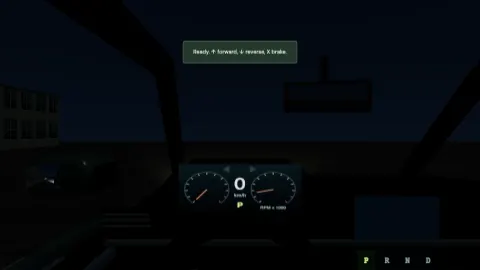
Night Parking
Reduced ambient light, headlights, and reversing lights.
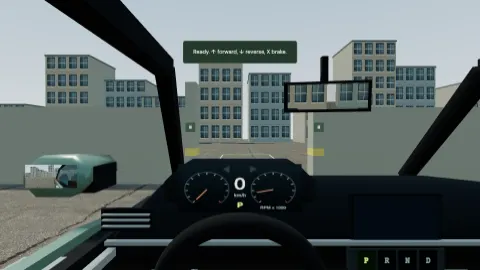
Extreme Precision Challenge
A small opening rewards calm pedal and steering inputs.
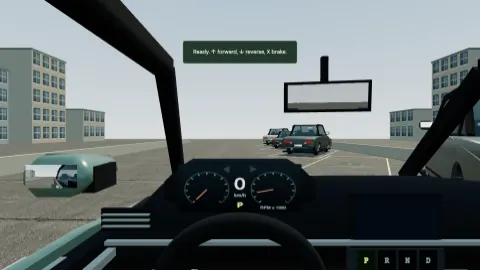
Angled Parking
Turn from the aisle into a metric bay at 30°, 45°, or 60°.
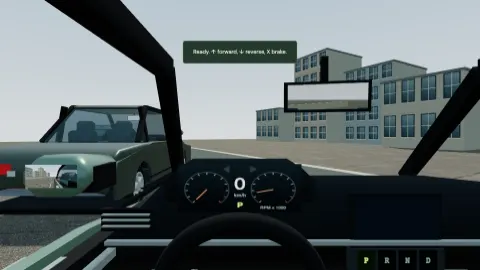
Reverse Out of an Angled Bay
Start parked, check the aisle, and reverse out without clipping the neighboring car.
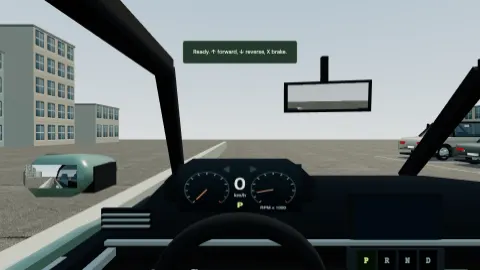
Forward Bay Parking
Enter forward and align between two real vehicle envelopes.
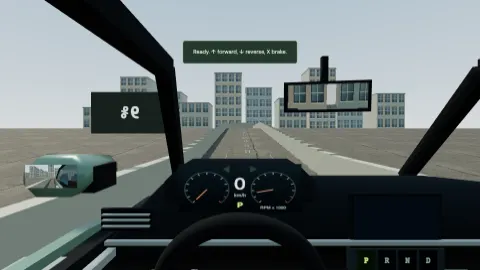
Ramp Approach & Hill Hold
A real grade with smooth transitions, narrow side walls and an upper landing.
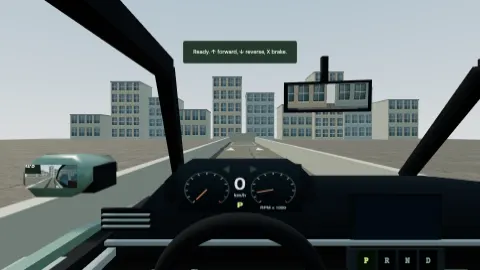
Speed Humps & Ride Control
Cross two raised road humps between narrow walls, then stop inside the marked area.
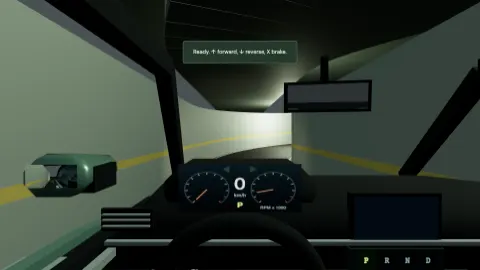
Spiral Parking Garage
Climb one or two helical turns between stacked concrete decks, then stop on the upper landing.
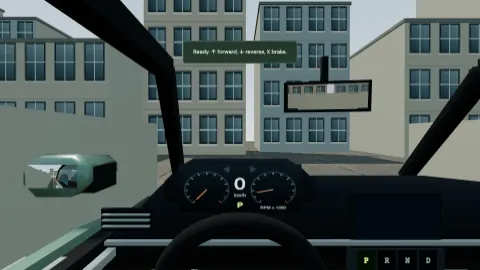
Reverse Around a Corner
Reverse through a walled 90° bend. Track the inside rear wheel and the front swinging outward.
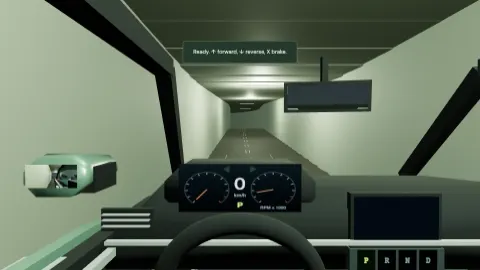
Ramp, Blind Turn & Upper-Floor Parking
Climb an enclosed ramp, take a blind 90° bend and park between vehicles on the upper floor.
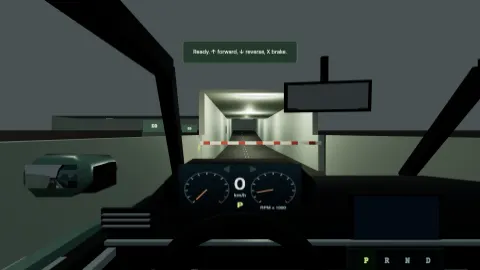
Ticket Barrier & Garage Parking
Stop at the ticket machine, wait for the arm, then climb the ramp and park upstairs.
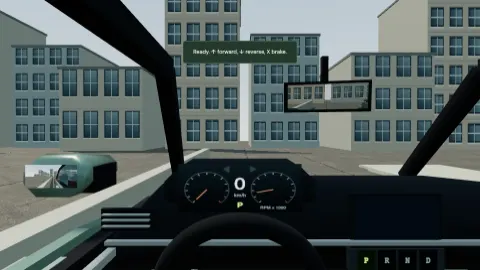
Right Parallel Parking · Opposite Wall
Park on the right with a wall limiting the front swing on the opposite side.
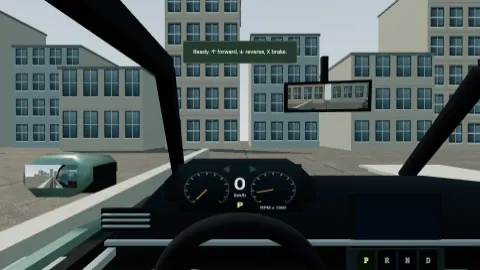
Tight Right Parallel Parking · Opposite Wall
Park on the right with a wall limiting the front swing on the opposite side and a short gap between the parked cars.
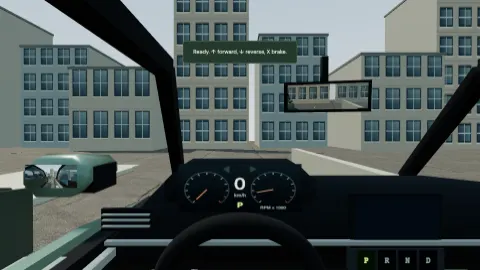
Left Parallel Parking · Opposite Wall
Park on the left with a wall limiting the front swing on the opposite side.
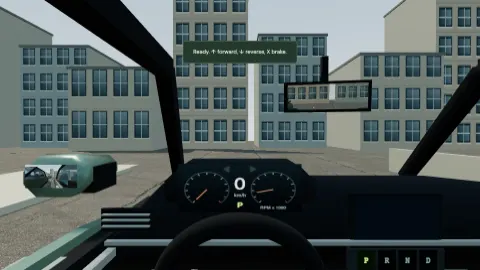
Tight Parallel Parking · Left
Small margins. Use the whole gap and make deliberate corrections.
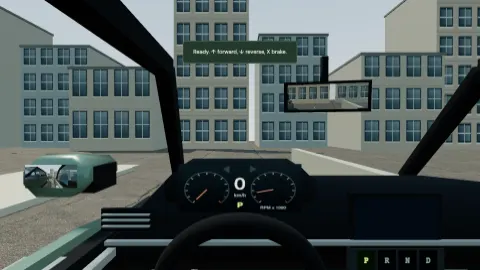
Tight Left Parallel Parking · Opposite Wall
Park on the left with a wall limiting the front swing on the opposite side and a short gap between the parked cars.